

Principles, Frameworks, Methods
A new system for player development

System: A set of principles on how something is done; an organized framework or method.
Most coaching ideas and beliefs come from teaching & learning about mechanical models, or what I would call frameworks. These mechanical models, or frameworks, are usually taught in a way that covers everything a coach would need to know.
They cover how the throw or swing works, what you should consider important information, how to think about the specific mechanics, and how those mechanics should be taught and practiced through drills. But this all-in-one model is too big and doesn’t do justice to the amount of valuable information available and how it can be used.
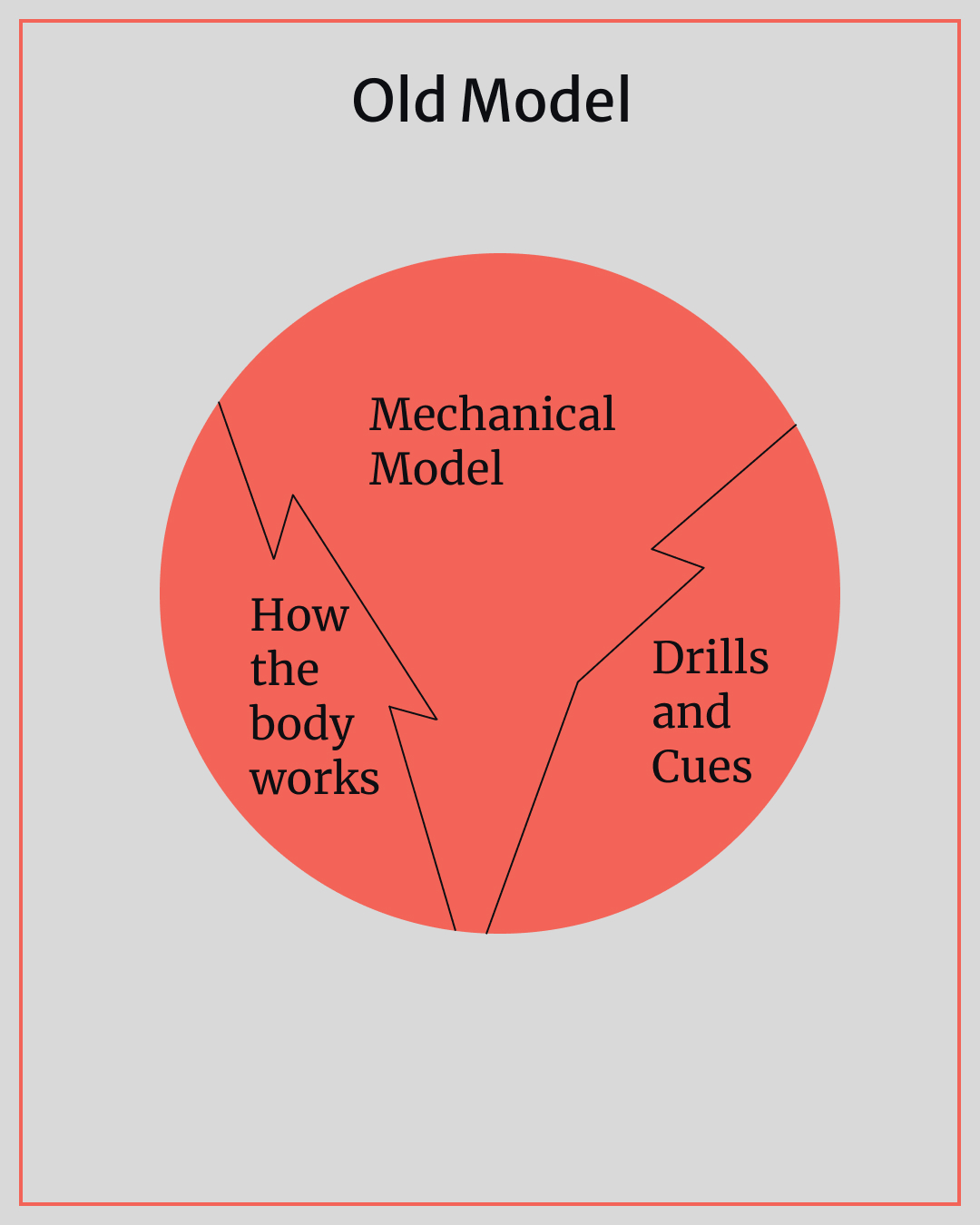
This idea of an all-encompassing framework should be split in two different directions, with several subcategories inside each. On one side, the framework should pull out a series of principles, and on the other side, it should be separated into a more distinct practical section of methods.
This breaks the typical model of everything being included in one framework and widens the scope of what coaches need to know, while also clarifying how decisions and information flow from one category to another and back.
Breaking the One-Size-Fits-All Model
By separating principles, frameworks, and methods, we move beyond the usual practice of bundling everything into a single, all-encompassing model. This wider view not only expands a coach’s understanding but also clarifies how decisions and information flow across these distinct categories.
From a big-picture sense, these fall under what I call principles, frameworks, and methods.
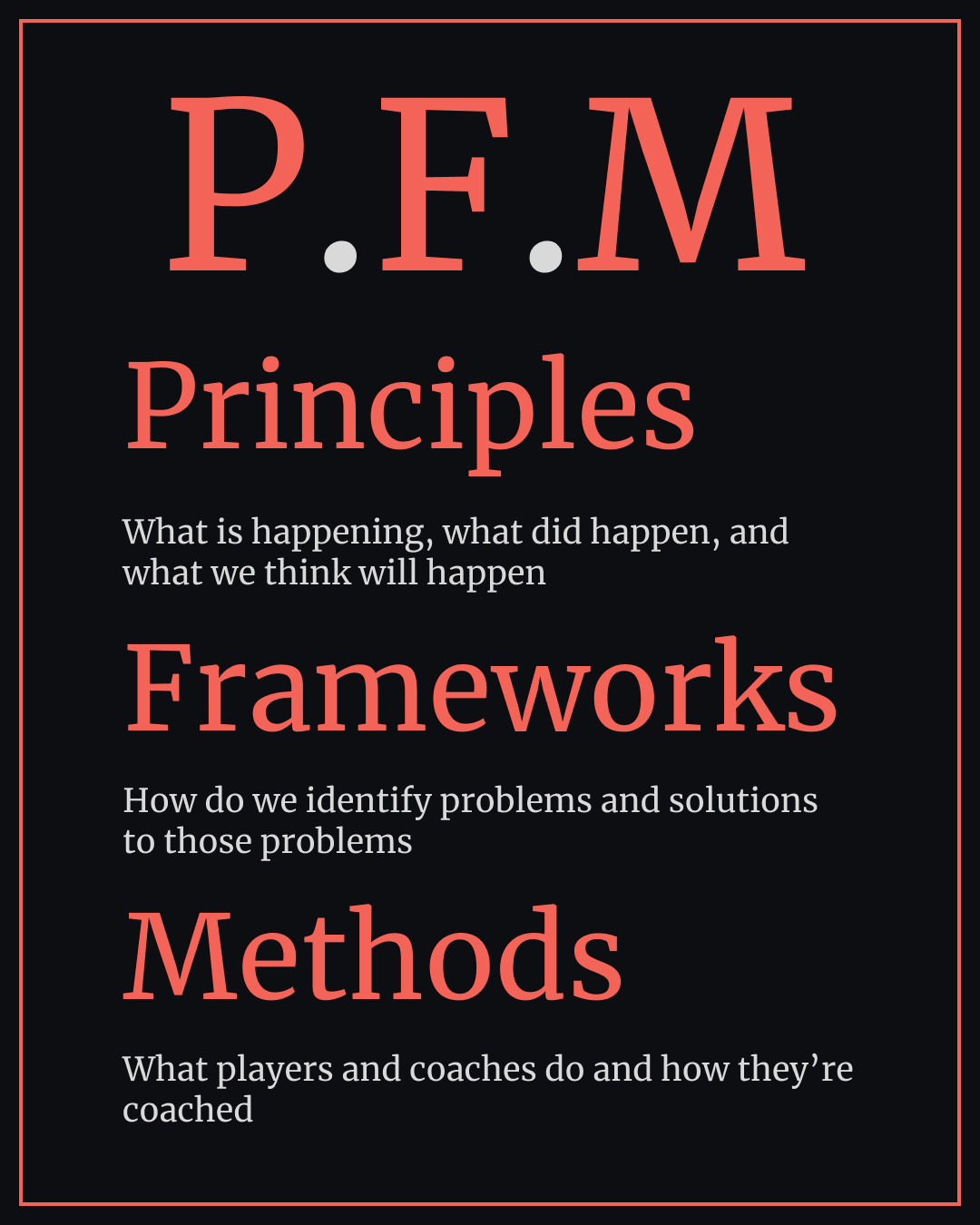
Principles - truths that guide our actions and decisions
What is happening, what did happen, and what we think will happen
This includes biomechanics, pitch tracking tech, and various baseball stats or analytics. These can be split into the previously mentioned inputs and outpus.
These are pieces of the game that are always happening, whether we measure them or not.
Frameworks - a particular set of rules, ideas, or beliefs that you use to deal with problems or decide what to do
How do we identify problems and solutions to those problems
This is what you would typically consider mechanical models, take your pick of any style you can find on social media, specifically how the body should work during the throw or swing.
These are largely how baseball is taught is the description of how a swing or throw works, ways to think about mechanical checkpoints, and drills to solve specific issues.
Methods - a systemic way of doing something, a procedure or technique
What players and coaches do and how they’re coached.
This is looking at a wider range of what players do. It covers drills, programming & workload, and strength & conditioning. These are the practical pieces of coaching.
This principles, frameworks, and methods system aims to be as all-encompassing as possible for how players and coaches make training decisions.
Now this is a lot to cover and just because something is listed above as a subcategory doesn’t mean there isn’t a lot of depth in that area. I don’t want to come off as if I’m brushing any of them off.
Connecting the Dots: Departmental Roles and the ‘Development T’
When you view these three areas from a team or organizational standpoint, each subsection often corresponds to an entire department—analytics, biomechanics, or strength and conditioning, for instance.
From a coaching perspective, this broader structure points to the concept of the ‘Development T.’ Simply put, a coach must cultivate deep expertise in at least one domain (the vertical line of the T) while still maintaining a broad, foundational understanding of other essential topics (the horizontal line).1
By embracing this T-shaped approach, teams, and coaches can ensure that every facet of player development receives both specialized and holistic attention.
Why is this needed?
Wider bird's eye view of what all the pieces are that go into player development. Coaches need to recognize what they’re good at to build off and what areas they can target to improve. Teams need to realize how each department is working both on its own and interconnected with others.
Redefine how you can plan, train, and problem-solve for athletes.
Here are a few questions we can ask, and try to answer over the next few pieces.
MLB teams have extraordinary amounts of data available, found in the principles, analytics, biomechanics, and technology. How are all those pieces supposed to fit together?
How does that decision-making process differ from a coach who has no technology and limited analytics?
Along the same lines, how can the effective introduction of technology reduce the reliance on more basic analytics to change how they coach?
We know much of the baseball world revolves around mechanical models and theories that dominate how the throw or swing works, along with drills to fit problems. How does the availability, and introduction, of different principles kill various sacred cows of how the throw or swing are ‘supposed’ to work?
Does the availability of more information in the principles push coaches to learn more mechanical models to pick and choose what is best for their athletes or do they reject various principles outright?
Even if coaches stick with one framework (or mechanical model) how do the ideas of dynamics system theory, ecological dynamics or constraints-led approach change the ideas of drills and practice?
How do those same ideas push coaches to leave the ideas of mechanical models behind entirely? Does the same happen with drills where they become super specialized?
How we effectively use workload monitoring to change programming in a way that can keep players healthy and improve their performance? How does knowledge of workload change the actual programming of drills?
How can we best utilize strength and conditioning knowing that some swing or throwing changes are best taken care of in the weight room and not through drills?
These are just a few questions I’m going to tackle but I hope they also start to turn the gears on how we can use everything we have to make players better.
We need a better way to define all the different areas where you can take in information and apply action to players to help them improve.
For the life of me, I can’t remember where the idea of the ‘T’ came from. If you know let me know and I’ll give full credit!